
Outdoor Fireplace Contractor in Grafton, OH: Gas vs. Wood-Burning, Permits, Clearances and Build Timelines
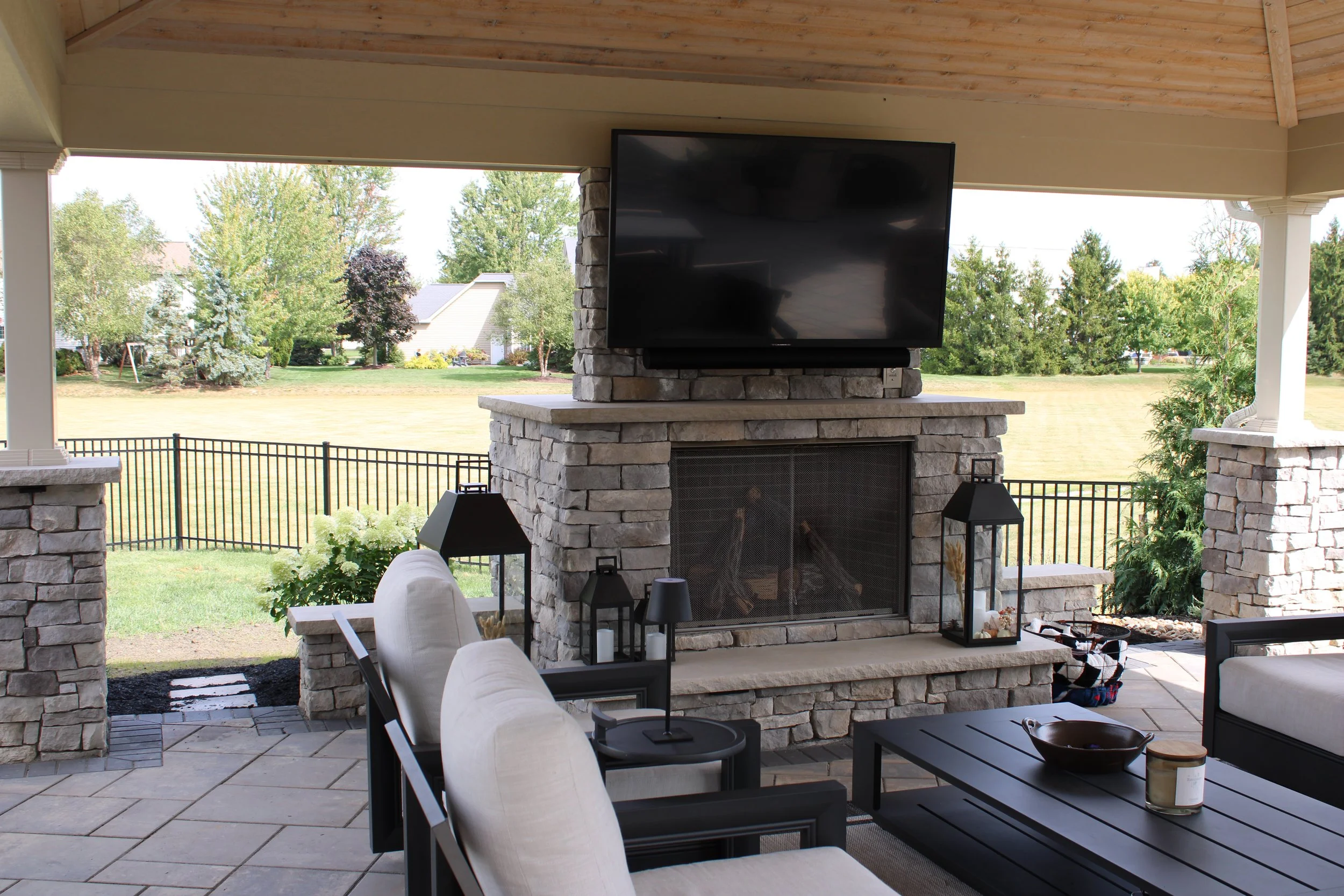
A homeowner working with an outdoor fireplace contractor in Grafton, OH usually reaches the same fork in the road early in the design process: gas or wood-burning. The choice shapes everything from the fireplace's footprint and utility requirements to how it actually gets used once the project is finished, and getting it wrong means living with a feature that doesn't match how the household actually spends time outside.
1st Impressions has built outdoor living spaces across Grafton and the greater Cleveland area for more than 20 years, holding Unilock Authorized Contractor status for over a decade and backing paver installations with a 10-year warranty.
That experience across hundreds of backyard projects shapes how the team walks homeowners through the gas-versus-wood decision before any design work begins.
What Is the Difference Between a Gas and Wood-Burning Outdoor Fireplace?
A gas outdoor fireplace connects to a natural gas line or a buried propane tank, igniting with the flip of a switch or the push of a button and burning cleanly without smoke, ash, or the need to source firewood. A wood-burning fireplace, by contrast, requires an actual fire built from seasoned firewood, producing a heavier flame, real smoke, and the characteristic crackle that many homeowners specifically want from an outdoor fire feature.
The physical construction differs as well. Gas fireplaces use a burner system set into a firebox, often finished with fire glass, lava rock, or ceramic logs designed to hide the burner while still allowing flames to show through. Wood-burning fireplaces need a genuine firebox built to handle real combustion temperatures, along with a functioning chimney or flue designed to draw smoke upward and away from seating areas rather than letting it drift back toward guests.
Both types anchor an outdoor living space in similar ways, serving as a visual focal point for patio furniture and gathering areas. The experience of using each one, though, differs enough that most homeowners develop a strong preference once they understand what each actually involves day to day.
Design Flexibility Differs Between the Two
A gas fireplace offers more flexibility in overall footprint and placement, since it doesn't require the same chimney height and clearance requirements that building codes place on wood-burning units. That flexibility lets a gas fireplace tuck into tighter spaces or sit closer to a home's exterior wall than a wood-burning fireplace typically allows. A wood-burning fireplace, with its taller chimney or flue structure, often becomes more of an architectural statement in the yard, visible from a distance and doubling as a design anchor for the entire outdoor living space, not just the seating area immediately around it.
Linear gas fireplaces have also grown popular for homeowners wanting a modern look, offering a long, low flame pattern instead of the traditional rounded firebox opening. Wood-burning fireplaces stick to more traditional proportions dictated by how a real fire needs to draw air and vent smoke, which limits design flexibility somewhat but appeals to homeowners specifically seeking that classic outdoor fireplace look.
Is a Gas or Wood-Burning Fireplace Cheaper to Run Over Time?
Upfront installation costs for gas and wood-burning fireplaces land in a similar range, since both require a properly built firebox, appropriate hearth and surround materials, and skilled masonry work regardless of fuel type.
Where the costs diverge is in ongoing operation. A gas fireplace on a natural gas line costs relatively little to run per use, since natural gas prices stay fairly stable and a typical evening's use burns a modest amount of fuel. A propane-fed gas fireplace costs somewhat more per use, since propane runs at a higher price point than natural gas, though it remains far more convenient than sourcing wood.
A wood-burning fireplace has no utility cost tied to running it, but that doesn't mean it's free to operate. Firewood needs to be purchased, seasoned properly (typically six months to a year of drying before it burns well), and stored somewhere accessible but protected from moisture. Homeowners who already have access to a wood supply, whether from their own property or a low-cost local source, often find wood-burning genuinely economical.
Homeowners without an easy wood source usually spend more sourcing quality seasoned firewood than they'd expect, especially during peak fall and winter demand when prices climb.
Installation Costs Vary by Utility Access
Running a new gas line to an outdoor fireplace location adds cost if the fireplace sits far from an existing gas meter or requires trenching across a finished yard. Properties with an existing gas line nearby, or a fireplace positioned close to the house's existing gas infrastructure, see lower installation costs than one requiring a long trench run. Propane tanks avoid the gas line question entirely but require space for the tank itself and periodic refills.
A wood-burning fireplace avoids gas line installation costs entirely, but the masonry work involved, a properly sized firebox, a chimney or flue built to code, and a hearth extension for safety, tends to run comparable to or slightly above a gas installation once labor and materials are factored in.
The exact comparison depends heavily on the specific design each homeowner chooses, since a simple gas insert costs less than an elaborate custom masonry gas fireplace, and a basic wood-burning firebox costs less than one built with an oversized chimney or decorative stonework.
Long-Term Cost Considerations Beyond the Build
Looking past installation, a gas fireplace's ongoing costs stay fairly predictable since utility pricing changes gradually and usage patterns tend to stay consistent year over year. A wood-burning fireplace's ongoing costs fluctuate more, tied to firewood market prices that often spike during particularly cold winters or when regional supply tightens.
Homeowners planning to use their fireplace frequently, several times a week during the outdoor season, should factor these longer-term patterns into the decision rather than focusing solely on the initial installation quote.
How Much Maintenance Does Each Type Actually Require?
A gas fireplace needs comparatively little routine maintenance. An annual inspection of the burner, gas line connections, and ignition system catches most issues before they become problems, and the fire glass or ceramic logs rarely need replacement unless damaged. Because gas burns cleanly, there's no soot or ash buildup to manage, and the firebox and surround stay visibly cleaner over time compared to a wood-burning unit.
A wood-burning fireplace requires more hands-on upkeep. Ash needs to be cleared out after each use or every few uses, since a buildup restricts airflow and makes future fires harder to start. The firebox and any chimney or flue need periodic inspection for creosote buildup, a byproduct of wood combustion that poses a fire risk if left unaddressed over multiple burning seasons.
Masonry surrounding a wood-burning firebox also experiences more thermal stress from actual flame contact, which means periodic checks for cracking or mortar wear matter more than they do with a gas unit.
What an Annual Inspection Actually Covers
For a gas fireplace, an annual inspection typically checks gas line connections for leaks using a soap-water test, verifies the ignition system fires reliably, and confirms the fire glass or ceramic logs sit correctly positioned over the burner.
For a wood-burning fireplace, an inspection covers the firebox lining for cracks, checks the chimney or flue for creosote accumulation and structural soundness, and verifies the spark arrestor or chimney cap, if one is installed, remains free of debris and functioning correctly.
Homeowners who use their fireplace heavily through the fall and into early winter benefit from scheduling this inspection each spring, before the outdoor season ramps back up, rather than waiting until an issue shows up mid-season when repairs take longer to schedule.
Seasonal Storage and Winter Considerations
Northeast Ohio's winters add another maintenance dimension for both fireplace types. A gas fireplace's exterior components benefit from a cover during heavy snow or ice to protect the burner and control components from moisture intrusion.
A wood-burning fireplace's firewood supply needs dry, covered storage positioned close enough to the fireplace to be practical but far enough away that stacked wood doesn't create a fire hazard near the structure itself.
Related: An Outdoor Fireplace Becomes the Perfect Place to Host Guests in the Westlake, OH, Area
Which Option Puts Out More Heat for a Northeast Ohio Backyard?
Wood-burning fireplaces generally produce more intense, radiant heat than a comparably sized gas fireplace, since a real wood fire burns hotter and throws heat more aggressively in a wider radius. For homeowners planning to use their outdoor fireplace through Ohio's cooler shoulder seasons, spring evenings and fall gatherings when temperatures dip into the 40s and 50s, that extra heat output extends how late into the evening or how far into the season the space stays comfortable.
Gas fireplaces still produce meaningful heat, particularly larger units with higher BTU ratings, but they typically don't match a wood fire's peak intensity. For many households, that's an acceptable tradeoff given gas's convenience, and a well-designed seating area positioned at the right distance from a gas fireplace still provides comfortable warmth on a chilly evening. Homeowners who prioritize maximum heat output for late-season use, however, tend to lean toward wood-burning once they understand the heat difference firsthand.
Wind exposure affects both fireplace types similarly, since an outdoor fireplace positioned in an open, wind-exposed part of a yard loses heat efficiency regardless of fuel source. 1st Impressions accounts for prevailing wind patterns and existing structures like fences or pergolas when siting a fireplace, since proper placement affects how much of that heat output a family actually feels while sitting nearby.
BTU Ratings Compare Gas Options Directly
Gas fireplace units carry a BTU rating that gives homeowners a way to compare heat output across different models before making a selection. A higher BTU rating generally means more heat, though the actual comfort a family experiences also depends on how the seating area is arranged relative to the flame and how exposed that seating area is to open air.
1st Impressions matches BTU output to the size of the intended gathering space, since an undersized unit in a large open patio area disappoints on cool evenings regardless of how well everything else about the installation was executed.
Wood-burning fireplaces don't carry a comparable standardized rating, since heat output depends on firebox size, wood type, and how the fire is built and tended, which makes the comparison inherently less precise but doesn't change the fact that a well-built wood fire generally throws more usable heat than most residential gas units.
Does Adding a Fireplace Require a New Patio, or Does It Fit an Existing One?
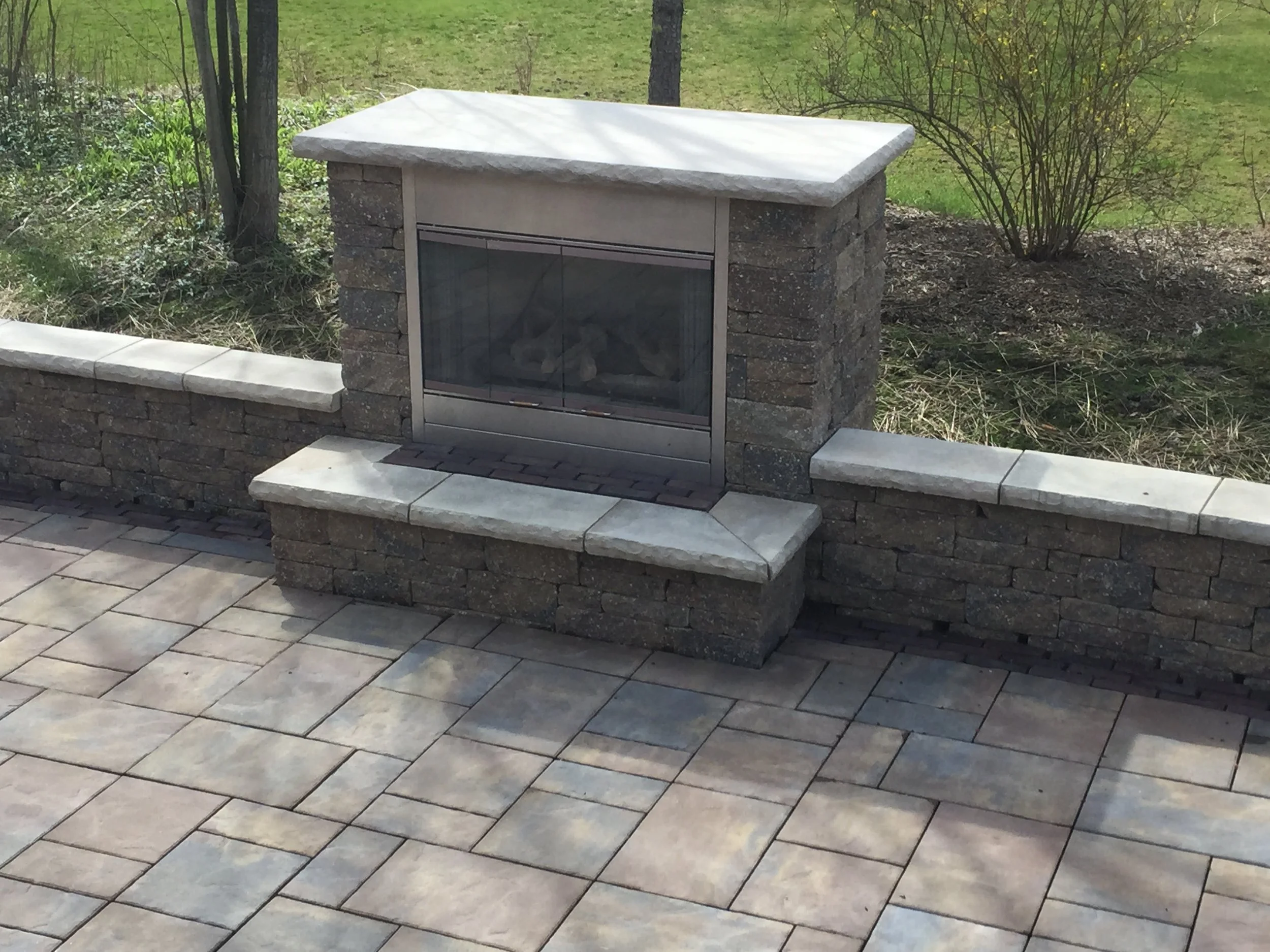
An outdoor fireplace doesn't always require tearing out and rebuilding an existing patio, but whether it fits depends on the patio's current layout, base construction, and available space. A patio built with room to spare, or one that already has utility access nearby, often accommodates a fireplace addition with targeted work rather than a full rebuild.
A patio built wall-to-wall with existing features, or one lacking the structural base needed to support a masonry fireplace's weight, often needs more significant modification.
Retrofitting an Existing Patio Versus Building New
For patios that do have room and adequate base support, retrofitting a fireplace typically involves cutting into a section of the existing paver or concrete surface, pouring a proper footing for the fireplace's foundation, and rebuilding that section to tie visually into the surrounding patio material.
This approach works best when the existing patio is relatively recent, built with a base depth suited to Northeast Ohio's frost line, and using pavers or materials still available for a reasonably close match.
Older patios, particularly those built decades ago with shallower bases or materials no longer manufactured, often present more of a challenge. Retrofitting a fireplace into a base that wasn't built to support the additional weight risks uneven settling around the new structure, and matching decades-old paver colors or textures rarely produces a clean, cohesive result even with careful sourcing. In these cases,
1st Impressions often recommends rebuilding the affected section, or in some cases the full patio, rather than compromising on a mismatched patch job that looks obviously added on rather than original to the design.
What a Site Evaluation Actually Checks
1st Impressions evaluates several factors before recommending whether a fireplace addition fits an existing patio or calls for a fresh design.
Base depth and compaction matter most, since a masonry fireplace adds substantial weight that an existing patio base often wasn't engineered to support. Utility access, whether gas line proximity for a gas unit or clearance requirements for a wood-burning unit's chimney, factors in next, along with available square footage for both the fireplace itself and the seating area positioned around it.
Existing patio material also plays a role. A patio built with pavers matching what 1st Impressions currently installs integrates more cleanly with new construction than an older patio using discontinued paver styles or a different material entirely, like poured concrete that would need to transition awkwardly into new masonry work.
For homeowners planning a fireplace as part of a larger project, a full patio rebuild that incorporates the fireplace from the start often produces a more cohesive result than retrofitting one onto an existing layout not originally designed around it. That decision comes down to budget, the existing patio's condition, and how central the fireplace is to the homeowner's overall vision for the space.
Build Your Outdoor Fireplace With a Contractor Who Knows Northeast Ohio Backyards
Choosing between gas and wood-burning comes down to how a household actually plans to use the space, how much hands-on upkeep feels reasonable, and how much heat output matters for extending the outdoor season into Ohio's cooler months.
Both options anchor a backyard beautifully when built by a team that understands the construction, utility, and climate factors specific to this region.
Schedule an Outdoor Fireplace Consultation with 1st Impressions to start planning a fireplace built for how your Grafton, OH backyard actually gets used.
Related: Here’s How an Outdoor Kitchen and Outdoor Fireplace Go Hand in Hand in Solon, OH
A transformation of your landscape begins with an idea of creating a restful or activity-filled spot in the backyard—and the result will be a gorgeous outdoor living space where you will want to spend the majority of your time. To create such an outdoor oasis, our design and construction experts can plan out a beautiful paver patio, fire features, outdoor kitchen, stairs and walkways, water features, and more.
About the Author
With over 20 years in business and more than a decade as a Unilock Authorized Contractor, 1st Impressions exceeds expectations with every outdoor living space we create—and we stand by our work with an exclusive 10-year warranty on our paver installations. Our attention to detail, knowledgeable team of experts, and dedication to excellent service ensure that you will be able to enjoy your transformed landscape for a long time.